Showing posts with label Understanding Addiction. Show all posts

Recovery is about Conscience


When we get into the rooms of recovery or find the help we need with a therapist, social worker, a family member or within the faith-based community, we know while we were using and abusing drugs and alcohol, we have lived a life of getting away with things.  This has been the case for some of us more than others.  People who love us unconditionally and people who hate us for what we have become in our addiction, make us aware of this more than we care to remember. In recovery however, this becomes our "to do" list for making amends.

How do we pay it back, make it right and make the people we’ve taken things away from whole?  We know, forgetting about it and just moving on is not enough.  Clearing the path to a clear conscience is a humbling experience.  Not everyone wants to see us succeed or is ready for us to come back into their life to make amends and right the wrongs.  That is why we must remember that forgiveness is a process that in some cases can take a lifetime.

If we go on the path of making amends and we try to find the way back to a clear conscience, in the process we discover something else.  We discover the hurt that drove the addiction and we discover how and why we buried it deep inside ourselves.  Sometimes parents cause this hurt when we are small children and sometimes strangers or those close to us inflict pain and instill fear in us that we never let go of, until we learn how to ask for help. 

Sometimes we were victims and this later made us victimize others.  Drugs and alcohol use and abuse fuel our rage and in this clouded rage we wrongly try to make others understand our pain and desperation.  Drugs and alcohol bring about behavior that leaves us blind to understanding exactly why we act the way we do.  Other times we let go of a joyful life because we do not have the tools to cope with what happened to us.  In either situation, our perpetrators and drug dealers have us where they want us and while they know we are afraid of what drugs have done to us, they now become the people who try to control us so they can keep doing us harm and taking things from us. 

In recovery we learn to understand these circumstances in ways that are thorough, so that we can assess these events and find maturity and peace within ourselves.  Letting go is a slow and personal process but we find that by helping others and by making a difference in our community, the healing process back to a natural self, reflects well on our character.  We know we have arrived in recovery when we exercise a disciplined sense of conscience each day, for the benefit of others and the betterment of ourselves.


Why People See Rehab as a Joke


Every time we hear a celebrity say they are going to go to rehab we know, chances that this is not going to work are great.  This is a disturbing societal perception, but with all the people who have gone back out, can anyone be blamed for this perception?   Rehab for some, is like a way-station to stop family and loved ones from worrying about a drug or alcohol problem.  It’s used by some as a tool to shut people up for a while, which is a sure way to lose the respect from the few friends we still have left by the time we enter rehab.

What rehab should mean however, is to make a decision to be ready to ask for help and make real life changes.  This is a very sacred process.  We know we have to make these changes and letting go of our old life, means being ready to take direction and especially knowing when to ask for help.

When we end up in rehab, we are confused from drug abuse and we have developed a cycle of poor decisions that we take along with us into recovery.  The poor decision making process is something we are not fully conscious of, as our thoughts stay clouded for quite some time while we try to get sober.  It is in that time we are most vulnerable and it is this time that counts the most in terms of severing our ties with party friends who can make us not take our recovery seriously.  This does get better though and eventually our senses return and we are in charge of our life again.

But this can only happen if we are willing to make the commitment it takes to get sober.  And that means, before we go in to rehab, we must be committed to change once and for all.  We must also make clear to those closest to us, who look out for our wellbeing, that we are serious about our recovery and that we are not just going in to clean up so we can go back out.  Real recovery is a commitment, a life-long bond you make with yourself.  You must be accountable.  You must manage your life and if you don’t know how to live sober, you must be willing to ask for help, learn and do whatever it takes to stay sober.


Support The CASE Act, the Californians Against Sexual Exploitation Act


Just last week, a very important ballot initiative called the CASE Act, qualified for the November 2012 ballot.  The CASE Act stands for Californians Against Sexual Exploitation Act.  This law, if it were to pass, would protect young girls and boys from being forced into human slavery and sexual exploitation, creating harsh penalties for the evildoers who take advantage of children. 


When I was 16 years old, I was approached by a man who wanted to exploit me, who propositioned me to sleep with men for money.  I told him I was not about to do this kind of thing and even though I dodged a bullet for a little while, the fact that I was even propositioned was horrifying to me.  I was already an alcoholic teen and substance abuser at that time and I remember that night I went home, I looked in the mirror and felt a hopelessness and dark feeling come over me.  I remember saying to myself “is this really what it’s come to?  If someone thinks I should be a prostitute, I must look like and be a terrible person.”     


That day took away so much from me.  It was as if someone had stolen away my dignity.  From that day on, my self-esteem became lower and lower and the thought that someone believed I should be a teen prostitute, stayed on my mind and I never told anyone until I went into treatment years later.  What this indecent proposal did to my inner dialogue was horrific.  I used drugs over it, which lead me to further behavior that was to my near self-destruction.  Because I never told anyone as a teen and lacked counseling, my secret grew in the dark.  In my early 20’s I was again propositioned several times and by the time drugs and lack of good opportunity became the ill-conceived, self-rationalizing factor, I decided not to ask for help and give in to the pimps for a short while.  


At the age of 22, I took drastic measures to put a stop to the people who tried to sexually exploit me by assisting to turn them in to the authorities.  The CASE Act would help create preventative efforts to help law enforcement be trained to handle the sensitive issues that keep children in fear of their procurers and would get them into counseling early on.   Sexual exploitation of children is a psychological and sometimes violet game that will haunt a child into adulthood and can make it impossible for a victim to have a normal relationship with a partner, if left untreated.  It involves drug addiction, humiliation, degradation and the refusing of all rights a child has to a happy, healthy and natural childhood.  Please join with me and support this very important initiative to help stop child sexual exploitation, The CASE Act.


For more, please visit:  www.caseact.org

Substance Abuse Can Cause Progressive and Permanent Disease of the Metabolism


Research on opioid abuse and use, has shown that use, especially addiction to opioids, causes metabolic malregulation.  This also goes for many illicit drugs.  But we don’t often talk about that part of addiction because perhaps it’s not medically or legally as “popular” as other serious consequences.

This is however, without a doubt yet another serious consequence that should be brought to the forefront of the discussion on drug use and abuse as well as prevention.  Experts have known for years that drug and alcohol use and abuse, over time or even short term in some cases, causes progressive and permanent disease of the metabolism.  Why don’t we hear more about it?  


I recently stumbled upon a FOX news article where Elvis Presley’s former doctor spoke about his beliefs on how Elvis died and I felt it was important to talk about it.  Keeping in mind that Elvis had 10 drugs in his system at the time of his death, his doctor of 12 years expressed his opinion on how he believed Elvis died.

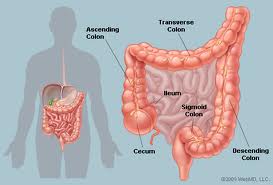
Dr. George Nichopolous cited autopsy results of Elvis to show he had an extremely abnormal colon and with this, unimaginable and most certainly painful digestive problems, resulting in chronic constipation.  The article described shocking autopsy findings citing “Presley’s colon was 5 to 6 inches in diameter (whereas the normal width is 2 to 3 inches) and instead of being the standard 4 to 5 feet long, his colon was 8 to 9 feet in length.”  Further stating “in the autopsy we found stool in his colon which had been there for four or five months because of the poor motility of the bowel.” 
  
The question is, how did Elvis’ colon it get like that?  Was he born this way and if he was, did the opioids and uppers he frequently took, prescribed by his doctor, slow his metabolism so much that it killed him?  How can we know for sure? 

What we do know form these findings are that if a person who is born with an abnormal colon or if they have a history of bowl paralysis in his or her family, they should be extremely cautious when taking doctor 
prescribed medications.


The Edge

Trying to get people to understand what addiction really does is not all that simple, but in this post I'm going to try to offer some perspective. There are many different forms of addiction and many different drugs people get addicted to. There is a place called “hitting bottom”, there is a place called “a high bottom” and “a low bottom.” There is also a place called “the edge” and by hitting bottom we get closer and closer to it.

Where “hitting bottom” means having done enough social damage, damage to health and finances, “hitting bottom” can still mean a person understands they have done so and are able to pull him or herself out of the problem by finding help and learning to take direction in recovery and getting back to a healthy life.

A “high bottom” is when a person still has a house, a car, a job, family and friends, yet is burdened with addiction. People with a “high bottom” usually are able to check in to a high priced facility and get clinical and medical help for his or her problem. These people are at risk of going to “the edge” if they relapse.

A “low bottom” is when a person has lost his or her home, the support of family and friends, has lost his or her job and basically lives on the street or is in jail. If lucky enough, this person is capable to get to a community based A.A. meeting, and is able to follow the principles of a 12 Step program, to some extent fully, yet more often than not they go back out and relapse. These people are at great risk of going to “the edge”.

“The edge” is a place where a person can be either rich or poor. They are already at the bottom, either high or low. People at the edge are hardcore addicts like Amy Winehouse or Michael Jackson was, for example. They have extreme physical signs of dehydration, emaciation, scarring and tooth decay. Their behavior shifts from sweet and sensitive to abrasive and hurtful in a nanosecond. These people have serious cognitive impairment, also referred to as brain damage, are conscious of it, yet they would never tell.

This damage to the brain, caused by the caustic effects of hardcore drug abuse, causes brain cell damage. Just imagine, if a drug can melt off tooth enamel like meth or cocaine can, imagine what it can do to the brain? When part of the brain stops working, it affects other parts of the brain as well. Communication and motor skill function present obvious signs of impairment; caused by neurotransmitters trying to communicate with the central nervous system. Neurotransmitters reach cell-damaged parts of the brain, causing what is known as uncontrollable “voices in your head.” This is the edge.

These so-called “voices” are an alarming and enormous problem and it is extremely difficult to reverse and come out of this state. Even after a hardcore addict quits, the problems persist because part of the thought process cannot be controlled and has a devastating effect on the outlook on life. After years in recovery, the brain eventually creates enough new brain cells and is able to repair the damage over time. This however, also requires a loving environment, plenty of good nutrition, a lot of rest, learning of a new inner dialogue by studying approved recovery materials, therapy and physical fitness.

When hardcore addicts reach this place of having voices in his or her head, it causes extreme self-doubt and fear of insanity. Most addicts do not understand what is happening and the cognitive complications pushes them over the edge and causes them to either commit suicide or keep on using drugs until they overdose. If someone you love has this problem, do not judge them, do not tell them they are crazy or insane. This is a serious condition and requires immediate medical help.

Helpful resource: Free Addiction Helpline (866) 535-9821